ABN: 23 625 688 020 | License: 383957C | Mail: admin@ktmaccess.com.au

Confined Space Entry Services
Certified confined space entry, atmospheric monitoring, and standby rescue — engineered for the environments where getting it wrong isn't an option.
Certified Technicians
IRATA-certified riggers and installers specialising in high-rise glazing and facade work.
Locations
Servicing Sydney, Central Coast & Newcastle across industrial and commercial sites.
Rescue-Ready
Standby rescue and retrieval systems on every entry — not an afterthought.

What is Confined Space Entry, Rigging & Rescue?
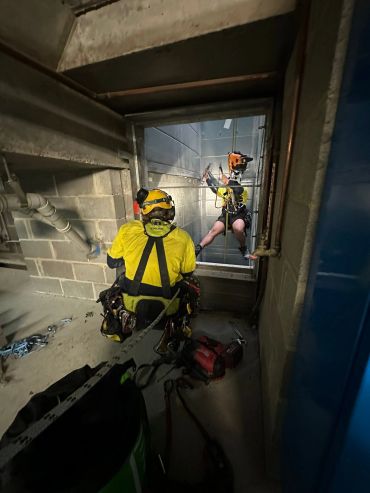
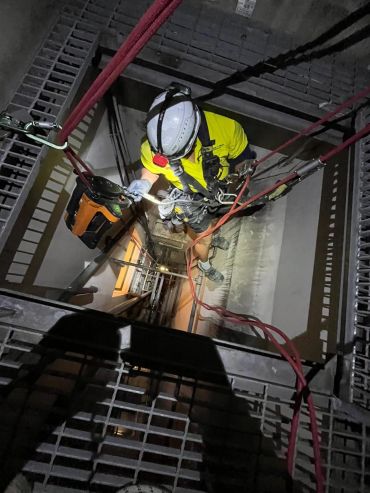
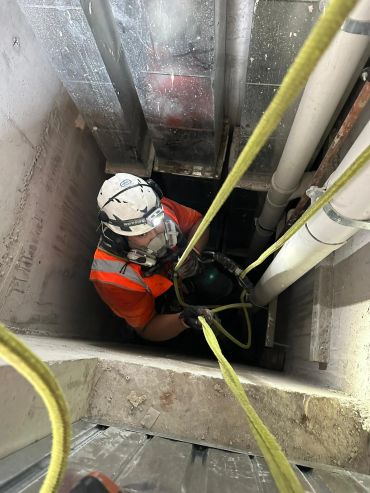
Confined space work involves entry into restricted or enclosed environments—such as tanks, shafts, plant rooms, and risers—where atmospheric hazards, limited egress, and entrapment risks render standard access methods unsafe. Before entering, it is essential to conduct atmospheric gas testing and continuously monitor for oxygen levels, toxic gases, and flammability, with a permit issued to confirm the space is safe for entry. Rigging systems—like tripods, davits, and winches—enable controlled entry, exit, and retrieval, while a standby rescue team and rescue plan are ready for action throughout the duration of the entry. At KTM ACCESS, this means we provide permit-controlled entry, comprehensive atmospheric gas testing, mechanical rigging for safe entry and retrieval, and dedicated rescue teams—all integrated, as in a confined space, these elements must not operate in isolation.
Our Entry & Rescue Process

Pre-Entry Assessment & Permit Issue
We assess the confined space, perform atmospheric gas testing, identify hazards, and issue a permit confirming the area is controlled and safe for entry while ensuring standby rescue is in place.
Atmospheric Testing & Monitoring
The atmosphere undergoes atmospheric gas testing before entry and is continuously monitored throughout, with ventilation deployed where needed to maintain safe air quality and ensure standby rescue is effective.
Rigging & Controlled Entry
Tripod, davit, or winch systems are set up to provide safe mechanical entry, exit, and load handling within the space, ensuring compliance with atmospheric gas testing requirements and supporting standby rescue operations.
Standby Rescue Cover
A dedicated rescue technician, specializing in atmospheric gas testing, remains on standby for the entire duration of entry, with retrieval systems ready for immediate deployment if required.
.jpeg/:/rs=w:370,cg:true,m)